
By Wayne Brown
A community center’s brand isn’t a logo.
It’s a revenue strategy.
When community centers struggle, the conversation usually starts with the symptoms.
- Membership is down.
- Camp enrollment is softer than expected.
- Fundraising has slowed.
- Long-time staff are leaving.
The instinct is to launch a marketing campaign, redesign the website, or increase advertising.
But marketing rarely fixes what branding has failed to define.
Imagine two Jewish community centers.
They offer nearly identical programs—fitness, aquatics, preschool, camp, older adult services, cultural events, youth sports, and wellness initiatives.
One has a waiting list for camp, strong member retention, loyal donors, and employees who stay for years.
The other constantly chases new members, struggles to retain staff, and wonders why fundraising has become more difficult.
The difference isn’t the programs.
It’s the promise.
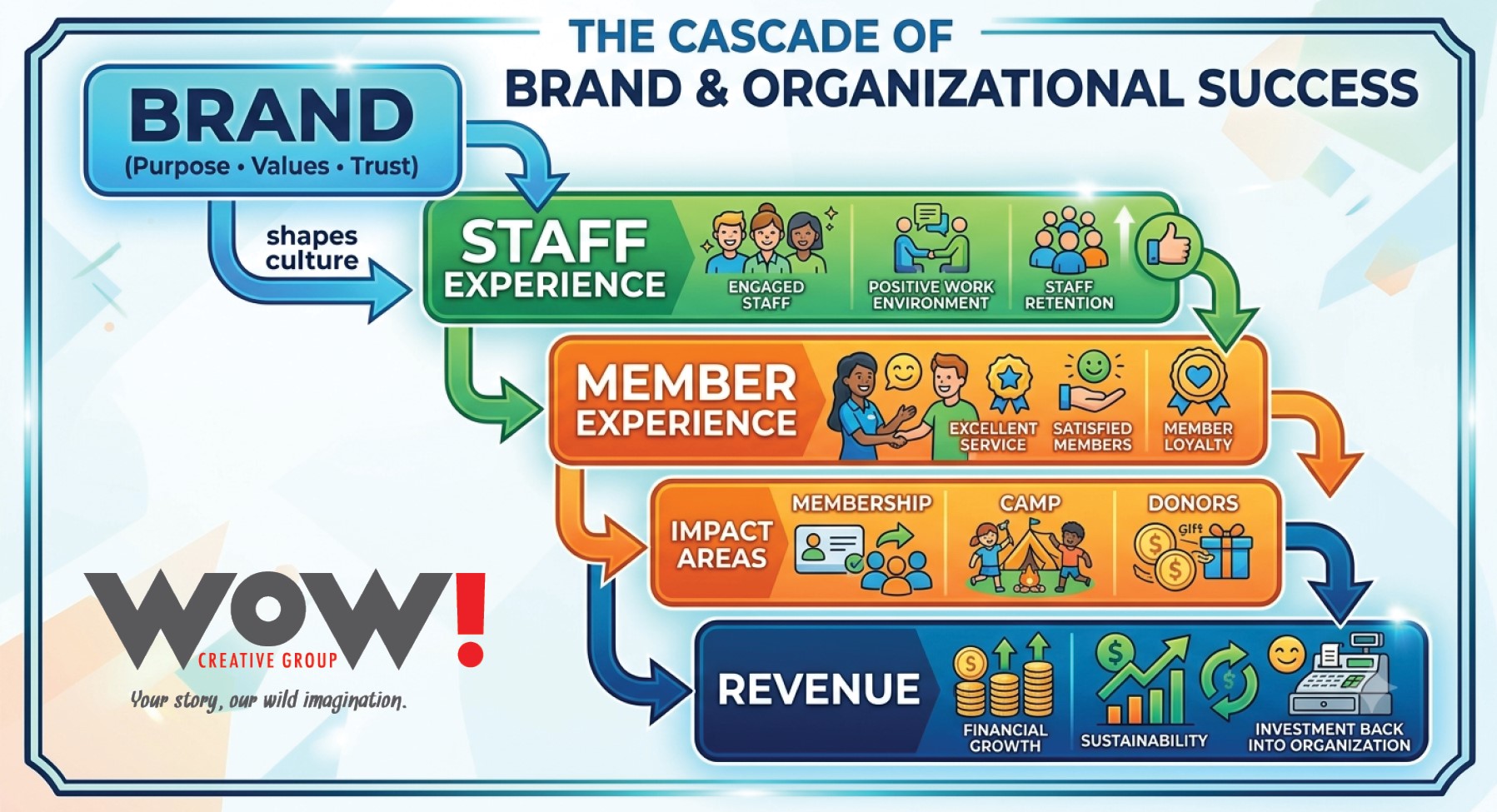
The strongest community centers know exactly who they are and why they exist. Every interaction reflects that identity—from the person greeting members at the front desk to the camp counselor leading a group of children, from the fitness instructor encouraging a member to the executive director speaking with a donor.
That consistency builds trust.
Trust becomes loyalty.
Loyalty becomes membership renewals.
Renewals become predictable revenue.
The same is true for philanthropy.
People don’t invest in buildings.
They invest in missions they believe in.
Staff don’t stay because of job descriptions alone.
They stay because they believe they’re part of something meaningful.
Jewish values have always understood this.
- Kehillah reminds us that community is built through relationships.
- Hachnasat Orchim teaches that every person should feel genuinely welcomed.
- Tikkun Olam reminds us that our purpose extends beyond providing programs—it is about strengthening lives and enriching our communities.
These values aren’t marketing slogans.
They’re operational decisions.
When leadership embraces those values and builds an organization around them, the brand becomes unmistakable. Members feel it. Staff live it. Donors support it.
When leadership ignores or abandons that identity, the opposite happens.
Culture weakens.
The member experience becomes inconsistent.
Staff disengage.
Revenue begins to erode—not because the community no longer needs the organization, but because the organization has stopped delivering the experience people trusted.
A strong brand isn’t created by a new logo or a clever advertising campaign.
It’s built by making thousands of decisions that consistently reflect a clear purpose and a shared set of values.
The financial results aren’t the goal.
They’re the outcome.
The healthiest community centers understand that branding isn’t a marketing expense.
It’s one of the smartest investments an organization can make.